When Elon Musk announced the renaming of Twitter to X, the global market's initial reaction was not praise, but shock, doubt, and even opposition.
A name with over a decade of brand equity and high global recognition was erased almost overnight.
But if we step outside emotional judgments of "good or bad," this renaming itself provides a highly valuable brand case study for businesses: in an era of high uncertainty, what does a brand truly serve?
This is not a conventional brand upgrade, but a public experiment about control, long-term vision, and the essence of branding.
Quick Takeaways
- Brand rebranding is about long-term structure, not just a logo update: X is defined as the entry point for an "Everything App," encompassing future business structures like social, content, and payments.
- Brand equity is a result, not a direction: When brand equity conflicts with future vision, sacrificing the former for strategic freedom can be necessary.
- Musk's decision-making: Not seeking to be "understood," but to be "validated"; viewing brand as a tool, not an emotional symbol; accepting significant short-term noise.
- Business insights: Does the brand limit business imagination? Is the brand a marketing shell or a strategic structure? Is there courage to bear short-term costs for long-term goals?
- Personal learning: Musk's brand judgment is consistently tied to systems, structure, and long-term paths, not emotions or market feedback.
- Essence of brand: The essence of a brand is never about security, but about going further.
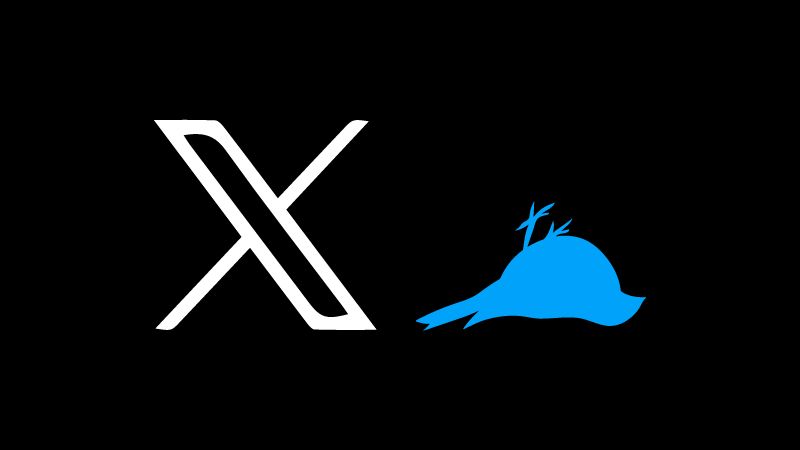
X Is Not a Logo, But a Long-Term Structure
From The Branding Journal's original article, we can see that Musk did not treat X as a visual update, but as a container carrying future business structure.
X is defined as an "Everything App" entry point:
Social, content, payment, creator economy, and business tools will gradually be integrated into it.
Under this logic, the name "Twitter" itself became a limitation— it's too specific, too social, too historical, unable to carry Musk's ambition for the future.
The insight is:
True brand upgrades are often not "optimizing existing image," but reserving space for future business forms.
Many companies' difficulties during expansion are not due to poor products, but because brand boundaries lock themselves in first.
Brand Equity Does Not Equal Brand Direction
Twitter's brand equity is extremely vast, which is the core argument of all opposition.
But Musk's choice reveals a harsh yet true fact:
Brand equity is a result, not a direction.
When brand equity conflicts with the founder's judgment about the future, he chose to sacrifice the former in exchange for strategic freedom.
This is almost a "taboo" in traditional brand logic, but in a highly competitive, technology-driven era, this approach is extremely realistic.
The insight for companies is:
If a brand can no longer support the next stage of development, then no matter how high the recognition, it may become a burden.
Three Atypical Characteristics of Musk-Style Brand Decisions
This rebranding clearly reflects Musk's consistent brand thinking, which is also the most controversial but most worth studying.
He does not pursue "being understood," but "being validated."
Decisions are not based on consensus, but on judgment of long-term results.
He treats brand as a tool, not an emotional symbol.
The value of a brand lies not in whether it is liked, but in whether it can support future systems.
He accepts significant short-term noise for brands.
In Musk's logic, the real risk is not controversy, but stagnation.
These characteristics are not suitable for all companies, but they reveal a brand decision paradigm under extreme circumstances.
What Can Companies Learn from X's Rebranding?
X's case does not mean "all companies should radically rename," but reminds us to re-examine several long-ignored questions:
Has the brand already limited business imagination in advance?
Is the brand just a marketing shell, or part of the strategic structure?
At critical moments, does the company have the courage to bear short-term costs for long-term goals?
For companies in transition, internationalization, or constantly expanding business boundaries, these questions are particularly important.
For Individuals, What's Worth Learning from Musk Is Not "Being Bold"
If you only see "he dares," that's actually a shallow interpretation of this case.
The deeper value lies in:
Musk's judgment about brands is always bound to systems, structures, and long-term paths, not emotions or market feedback.
He does not ignore risks, but actively chooses which risk to bear.
This is a highly scarce ability for any decision-maker in a complex environment.
Conclusion: The Essence of Brand Is Never Security
Whether X's rebranding is successful still needs time to verify.
But it has accomplished one important thing—
It forces us to rethink:
Is a brand for being recognized, or for going further?
In an era where the speed of change far exceeds the accumulation of experience, perhaps the real danger is not "changing too much," but not daring to change again.
Source
This article is compiled and extended based on The Branding Journal's "Twitter Rebrand to X: What Brands Can Learn From Elon Musk's Bold Move."
Copyright
This article is an original interpretation from StarRise Expo's "Knowledge Academy." Please credit the source when reprinting.